
Study in Portugal Without IELTS for International Students in 2025

Are you thinking about how to study in Portugal but feeling overwhelmed by the process? You’re not alone. Many students face challenges like choosing the right university, understanding tuition fees, arranging accommodation, and navigating the visa application process. These hurdles can make planning your academic journey stressful and confusing.
Don’t stress out! This guide is here to help! I’ll walk you through everything, from top universities and affordable tuition options to the cost of living and student visa requirements. Moreover, I’ll explain how our NIF and visa consultancy services can make your transition to Portugal smooth and stress-free.
Let’s simplify your journey and show why studying in Portugal is worth it!
Top Universities to Study in Portugal
Portugal has some of the best universities for international students. These universities are well-known for their quality education, friendly campuses, and unique study programs. Let me share some of the top ones:
University of Lisbon
The University of Lisbon (ULisboa), founded in 1911, is Portugal’s largest and public research university. It is located in the heart of Lisbon, the country’s capital. It’s ranked 211 out of 20,966 universities in the world and 80th in Europe.
| Aspects | Details |
|---|---|
| Name | University of Lisbon (ULisboa), |
| Type | Public research university |
| Known for | Prestige, high-quality education, and international collaboration |
| Degrees | Over 400 degrees in many subject areas |
| Students | Over 50,000 students |
| Professors and researchers | About 3,500 professors and over 400 researchers |
| International agreements | Over 550 agreements and protocols with international institutions |
| Address | Cidade Universitária, Alameda da Universidade, 1649-004 Lisboa, Portugal |
| Tuition Fees | Bachelor’s and Master’s programs typically range from €1,000 to €1,500 per academic year for EU/EEA studentsFor non-EU/EEA students, the fees can be between €3,000 and €5000 per academic year |
| Colors | Black, White, Green, Red, Purple, Royal Blue, Yellow, Brown, Pink, Sky Blue, Cerulean, Orange |
| Motto | Ad Lucem (Latin for “Towards the Light”) |
| Phone | +351 21 796 7624 |
| Operating Hours | Open 24 hours |
When I visited this university, I noticed how lively the student community was. There were students from all over the world, which made the environment more welcoming.
University of Porto
The University of Porto is one of the top universities in Portugal. It is known for its excellent education and intense focus on research. The university is located in the lively city of Porto, making it a superb place for students. It was founded on March 22, 1911, and has a rich history. Over the years, it has gained a reputation for providing high-quality education and contributing to Portugal’s culture and knowledge.

| Aspects | Detail |
|---|---|
| Name | University of Porto |
| Type | Public Research University |
| Founded | March 22, 1911 |
| Address | Praça de Gomes Teixeira, 4099-002 Porto, Portugal |
| Total Enrollment | 31,352 students (2013) |
| Acceptance Rate | 58.8% (2013) |
| Colors | Gold |
| Motto | Virtus Unita Fortius Agit (Strength United Acts Stronger) |
| Key Strengths | Research Excellence, Architecture, Arts, Life Sciences, Engineering |
| Phone | +351 22 040 8000 |
| Operating Hours | Open 24 hours |
| Notable Feature | 2nd largest university in Portugal; significant research output |
I have a friend who studied architecture here. She often mentioned how the faculty encouraged creativity and practical learning. Furthermore, she loved exploring Porto’s historic streets during her free time.
University of Coimbra
The University of Coimbra is one of the oldest universities in the world, having a history of over 700 years. It was first established in Lisbon in 1290 but moved permanently to the beautiful city of Coimbra in 1537. It isn’t just a place of learning but also a UNESCO World Heritage Site known for its stunning architecture and historical significance.

| Aspect | Detail |
|---|---|
| Name | University of Coimbra (UC) |
| Type | Public Research University |
| Founded | 1290 in Lisbon, relocated to Coimbra in 1537 |
| Address | Palace of Schools, 3004-531 Coimbra, Portugal |
| Enrollment | Over 24,800 students |
| Tuition Fees | 1,063.47 EUR, International tuition 7,000 EUR |
| Academic Staff | 2,179 |
| Rector | Amílcar Falcão |
| Campus | Urban/College Town |
| Phone | +351 239 859 900 |
| Operating Hours | Open 24 hours |
When I first saw photos of this university, I was amazed by how beautiful it looked. A friend who studied law here said the library was like something out of a movie—absolutely breathtaking!
Portuguese Universities Offering Programs for International Students
Here’s a list of Portuguese universities offering programs for international students:
| University | Location | Key English-Taught Programs |
|---|---|---|
| University of Lisbon (ULisboa) | Lisbon | Medicine, Architecture, Economics, Engineering |
| University of Porto (UP) | Porto | Architecture, Civil Engineering, Data Science, Finance |
| NOVA University Lisbon | Lisbon | Information Management, Data Science, Information Systems |
| ISCTE – University Institute of Lisbon | Lisbon | Social Sciences, Business, Technology |
| Polytechnic Institute of Leiria | Leiria | Computer Science, Engineering, International Business |
| Catholic University of Portugal | Lisbon, Porto | Business, Economics, International Studies |
| University of Coimbra | Coimbra | Law, Economics, Engineering, Social Sciences |
| University of Aveiro | Aveiro | Engineering, Management, Marine Sciences |
| University of Minho | Braga, Guimarães | Engineering, Humanities, Business |
| University of Algarve | Faro | Tourism, Marine Biology, Biomedical Sciences |
| Polytechnic Institute of Porto | Porto | Engineering, Business, Arts |
| University of Évora | Évora | Environmental Sciences, Arts, History |
| University of Beira Interior (UBI) | Covilhã | Aeronautical Engineering, Computer Science, Business |
Cost of Studying and Living in Portugal
Studying and living in Portugal is more affordable than in many other European countries. The costs are reasonable, making it an excellent option for international students who want quality education without breaking the bank. Here’s a simple breakdown of what you can expect:
Tuition Fees
Tuition fees in Portugal vary because universities set their fees. Public universities usually charge less than private ones.
Tip: If you’re looking for affordable study options in Portugal, consider public universities, which usually have lower fees.
Accomodation Costs
While the cost of living in Portugal has increased in recent years, it’s still relatively affordable.
1. Accommodation
2. Food and Daily Expenses
To cover all your living expenses, you’ll need approximately €7,800-10,200 per year (~US$9,400-12,300). If you plan to live in a big city like Lisbon, it’s wise to budget more.
Transportation Costs
Public transportation is reliable and affordable in Portugal.
Earning While Studying
Portugal allows students to work while they study, which can help offset living costs.
How to Apply to University in Portugal?
Applying to a university in Portugal is a straightforward process, particularly for undergraduate studies. The application system is centralized, which makes it easier to navigate. Here’s what you need to know:
1. Use the Centralized Application Portal
You will apply for undergraduate programs through a centralized online portal called Candidatura.
Tip: Check the available vagas and rank universities wisely to improve your chances.
2. Check Entry Requirements
Before applying, ensure you meet the university’s entry requirements.
3. Document Verification and Translation
If you’re applying to public universities, your documents must be officially verified and translated into Portuguese.
4. Required Documents
When applying, you will need the following:
Tip: Double-check with your chosen university to meet their specific requirements.
Application Deadlines
Most universities have 2 rounds of applications:
5. Waiting Period
After submitting your application, you will typically receive a response from the university eight weeks after the deadline.
Scholarships and Financial Aid for International Students in Portugal
Study in Portugal is more accessible because of the variety of scholarships and financial aid options available to international students. You can explore funding opportunities from the EU or elsewhere to reduce your tuition and living costs. Here’s a guide to popular scholarships and tips to maximize your chances.
If you work remotely or as a freelancer, consider the Portugal Digital Nomad Visa, a perfect route for flexible living and long-term residence while working from anywhere.
1. Erasmus+ Program
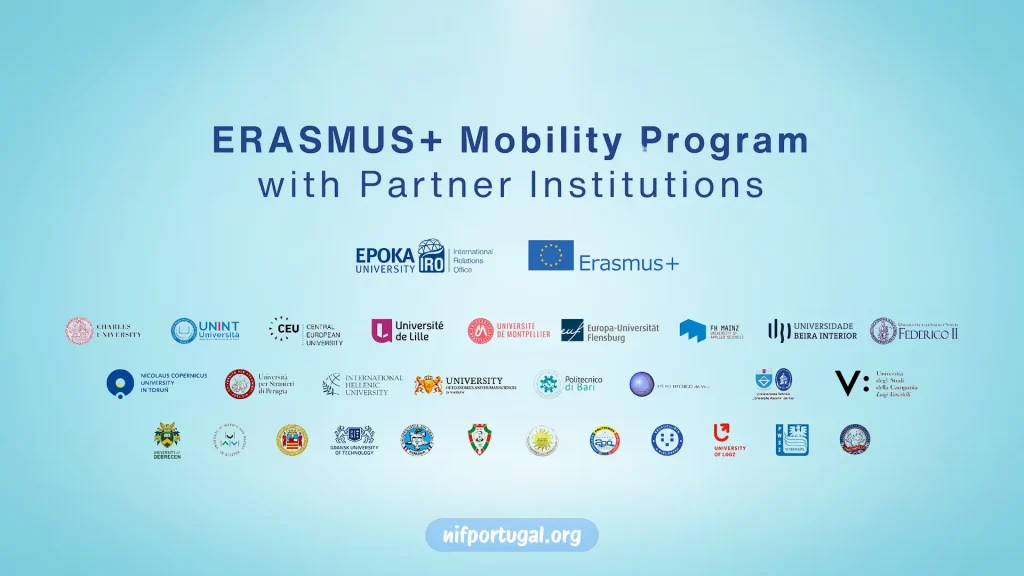
The Erasmus+ Program is one of the most well-known scholarships for students in Europe.
Tip: Keep an eye on deadlines and maintain good academic performance to qualify for Erasmus+ funding.
2. Portuguese Government Scholarships
The Portuguese government offers scholarships to international students through various programs.
Tip: Some universities offer specific scholarships under this scheme, so check with your chosen institution.
3. University-Specific Scholarships
Many Portuguese universities provide scholarships for outstanding international students.
Tips to Apply and Maximize Your Chances
Portuguese Student Visa Process
If you’re an international student planning to study in Portugal, you’ll need a student visa (if you’re from outside the EU/EEA/Switzerland). Here’s a step-by-step guide to help you through the process:

Step-by-Step Guide to Applying for a Portuguese Student Visa
- Accept Admission to a Portuguese University
Ensure you have an official acceptance letter from a recognized Portuguese institution. This is a mandatory requirement for your visa application.
- Determine the Type of Visa Needed
- Prepare the Required Documents
- Gather the following documents for your application:
- Submit Your Application
- Pay the Visa Fee
Fees vary but are typically around €60-90 for a long-term student visa.
- Wait for Processing
The processing time is usually 2-3 months, so apply well before your program start date.
Why Choose Portugal for Higher Studies?
Portugal has become a sought-after destination for international students, offering a unique combination of high-quality education, affordability, and cultural richness. Here’s why Portugal should be on your top priority for studying:
Quality of Education
Portugal is home to prestigious universities known for academic excellence and innovation.
Affordable Tuition Fees
Multicultural Environment and Welcoming Communities
English-Taught Programs
Language barriers are no obstacle in Portugal, as universities offer increasing English-taught programs.
Frequently Asked Questions
Conclusion
Studying in Portugal is more than just attending classes; it’s journey of discovery. The universities offer excellent education, but what truly stood out to me was the warmth of the people and the vibrant culture. I found the tuition fees and living cost in portugal manageable, which made it easier to focus on my studies and enjoy my time there. Walking through the cobblestone streets, exploring historic landmarks, and experiencing Portuguese traditions made my time unforgettable.
If you’re looking for a place that balances academic excellence with a rich cultural experience, I highly recommend choosing to study in Portugal. It’s your decision you won’t regret it!
Grab Our NIF and Visa Consultant Service
We offer NIF and visa consultancy services to help students who want to study in Portugal. Getting an NIF is essential for opening a bank account, renting accommodation, and managing other vital tasks in Portugal. Our visa consultancy ensures that you understand the process, meet all requirements, and submit a strong application.
With our support, you can focus on preparing for your studies while we handle the paperwork, making your transition to Portugal smooth and stress-free. Let us help you start your academic journey with confidence!