All Types of Visas for Portugal in 2025? Which One You Should Get?

Portugal is an eyeful land in Southern Europe that attracts many visitors yearly. Its breathtaking landscapes, rich culture, and pleasant weather make it a top destination for tourists, students, and workers. Whether you’re visiting for a short trip or planning to stay long-term, you must choose the correct Portugal visa Type.
Portugal has several visa options, each designed for different needs. This guide will clarify all Portuguese visa types and help you understand which is best for you. Whether you’re a traveler, a student, or a digital nomad, we’ve got the information to help you navigate the process and make the right choice.
Why Do You Need a Visa to Portugal?
If you’re planning a trip to Portugal, understanding its visa policy is necessary to ensure a smooth entry. Portugal is part of the Schengen Area, a group of 27 European countries with shared border control rules. This means that your visa requirements will depend on your nationality and the purpose of your visit.
For EU/EFTA Citizens
You don’t need a visa to visit or live in Portugal if you’re a European Union (EU) or the European Free Trade Association (EFTA) citizen. You can stay in Portugal for 3 months (90 days). You have the right to move freely between member states.
However, if you plan to stay longer than 90 days, you must apply for a registration certificate, allowing you to reside in Portugal for an extended period legally. After living in Portugal for 5 years, you can apply for permanent residency, granting you more rights and the ability to stay indefinitely without needing to renew your visa.
For Non-EU/EFTA Citizens
Things are a bit different for travelers from outside the EU/EFTA. If you’re from a non-EU/EFTA country, you’ll usually need a visa to visit Portugal for short stays under 3 months. However, Portugal has made travel more accessible for many nationalities through diplomatic agreements with 61 countries.
For instance, if you’re from the United Kingdom, the United States, or Canada, you can visit Portugal without needing a visa for a short stay. But if you plan to stay longer than 3 months, you’ll need to apply for a long-term visa before heading to Portugal, especially if you’re moving for work, study, or other extended purposes.
Portugal Visa Types
This table highlights the different types of visas available in Portugal for 2025, their purposes, duration of stay, and application fees.
| Portugal Visa Types | Purpose | Duration | Application Fee |
|---|---|---|---|
| Schengen Short-Stay Visa | Tourism, family visits, business, transit, short-term work | Up to 90 days within 180 days | €90 (€40 for children) |
| Seasonal Work Visa | Temporary seasonal work in agriculture, hospitality, retail | Up to 90 days within 180 days | €90 |
| Airport Transit Visa | Transit through Portugal to a non-Schengen country | Short transit duration | €90 |
| Temporary Stay Visa | Work, study, internships, volunteering for up to 1 year | 90 days to 1 year | €90 |
| Temporary Work Visa | Long-term seasonal work, freelance, scientific research | 90 days to 1 year | €90 |
| Study Visa (Temporary) | Study programs up to 1 year | 90 days to 1 year | €90 |
| Professional Training Visa | Training, internships, or volunteering for 3 to 12 months | 3 to 12 months | €90 |
| Medical Treatment Visa | Medical treatment in Portugal or accompanying a patient | As required for treatment | €90 |
| Youth Mobility Visa | Study, training, internships, volunteering, cultural exchange | Up to 12 months | €90 |
| Self-Support Visa | For individuals with independent financial means | Up to 1 year | €90 |
| Religious Purposes Visa | Religious training or studies | 90 days to 1 year | €90 |
| Long Stay Visa (Residency Visa) | Long-term residence, work, study, family reunion | More than 1 year | €90 |
| Work Visa (D1) | Long-term work, scientific research, sports | More than 1 year | €90 |
| Study Visa (D4) | Long-term study programs | More than 1 year | €90 |
| Professional Training Visa (D4) | Long-term professional training or volunteering | More than 1 year | €90 |
| Family Reunion Visa (D6) | Family members joining non-EU/EFTA residents | More than 1 year | €90 |
| Retirement Visa (D7) | Retirees or individuals with independent financial means | More than 1 year | €90 |
| Digital Nomad Visa (D8) | Remote workers with foreign employers | More than 1 year | €90 |
| Golden Visa (D9) | Investment-based residence permit | More than 1 year | Varies by investment |
1. Short Stay Visas (Schengen Visas)
A short-stay visa, also known as the Schengen Visa, allows you to stay in Portugal for up to 90 days within 180 days. This visa is commonly issued for various reasons, including:
The Schengen Visa permits entry into Portugal and allows you to travel freely within other countries in the Schengen Area for the duration of the visa.
To apply for this visa, you must submit your application at the Portuguese embassy or consulate in your home country. You can apply no earlier than 6 months and no later than 15 days before your planned trip to Portugal.
Cost of a Short-Stay Visa
The general fee for a Schengen short-stay visa is €80. For children aged 6 to 12, the cost is reduced to €40. In some countries, you may also have to pay a service fee, which usually doesn’t exceed half of the visa cost. This means the service fee can be up to €40 for adults and €20 for children between 6 and 12 years old.
Nationals from countries that have Visa Facilitation Agreements with the EU are eligible for a reduced visa fee of €35. These countries include Albania, Armenia, Azerbaijan, Bosnia, Georgia, North Macedonia, Moldova, Montenegro, Serbia, and Ukraine. This reduction makes it more affordable for citizens of these countries to apply for a short-stay Schengen visa.
Who is Exempt from Paying the Schengen Visa Fee?
Some people are exempt from paying the Schengen Visa fee. These include:
Types of Short Stay Visas (Schengen Visas)
1. General Short Stay Visa
The General Short Stay Visa is a 90-day visa for purposes such as tourism, visiting family, or short-term work or business. To apply, you’ll need to submit the following documents along with your application form:
2. Seasonal Work Visa
This visa is for seasonal work in sectors such as:
To apply, you’ll need to submit the following documents along with your application form:
This visa allows for temporary work in Portugal within these specific industries.
3. Airport Transit Visa
This visa is granted for airport transit to allow passengers to change flights in the international area of an airport without entering the Schengen Area. It is mandatory for travelers who transfer flights in a Schengen country unless they are exempt from needing an entry visa for Portugal.
To apply, you’ll need to submit the following documents along with your application form:
This visa ensures smooth transit through Schengen airports for those connecting to non-Schengen destinations.
2. Temporary Stay Visa
The Temporary Stay Visa allows you to stay in Portugal for up to one year with the ability to make multiple entries, meaning you can leave and re-enter the country during this period. This visa is required for third-country nationals staying in Portugal for more than 90 days but less than a year, except for:
You must submit your application at the Portuguese embassy or consulate in your home country to apply. While the Portuguese immigration authorities have a 30-day deadline to decide on temporary visa applications before your travel date, applying several months in advance is recommended.
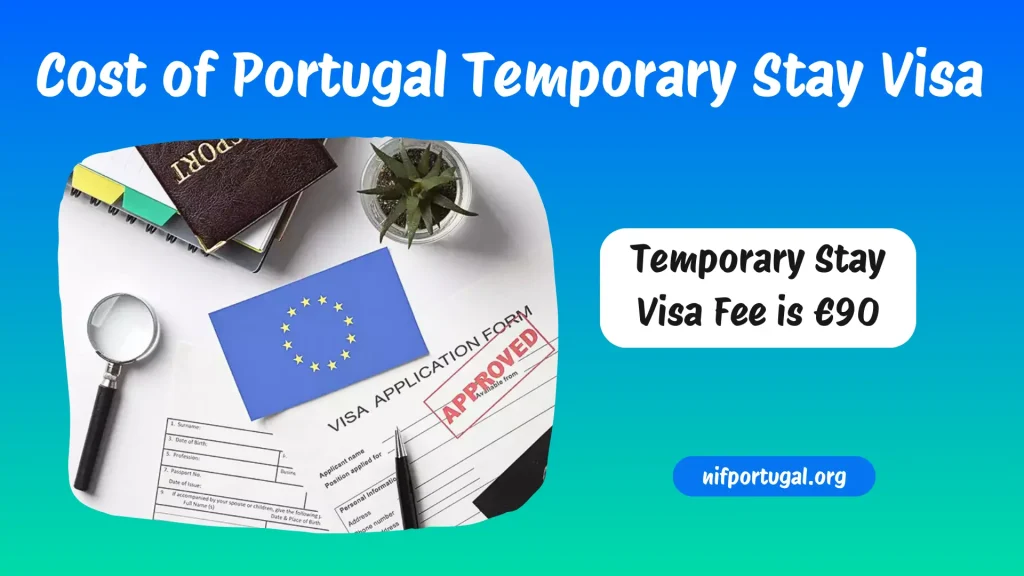
Cost of Portugal Temporary Stay Visa
The application fee for the Temporary Stay Visa is €75.
Who is exempt from paying the Temporary Stay Visa fee in Portugal?
The following groups are exempt from paying the Temporary Stay Visa fee:
Documents for Temporary Stay Visa
To apply for a Temporary Stay Visa in Portugal, you’ll need the following documents along with your completed application form:
These documents ensure that you meet the requirements for a Temporary Stay Visa and can legally stay in Portugal for up to 1 year.
Types of Temporary Stay Visa
1. Temporary Work Visa
You can apply for a Temporary Work Visa if you plan to work in Portugal for 90 days and one year. This visa is available for various types of employment, including:
In addition to the standard application form, you’ll need to submit the following additional documents:
These documents help confirm the nature and purpose of your work, ensuring you’re eligible for temporary employment in Portugal.
2. Professional Training, Internship, or Volunteering Visa
This visa is for those engaging in professional training, unpaid internships, or volunteering with a charity or NGO in Portugal. The visa is temporary and covers activities lasting between 3 to 12 months.
In addition to the general documentation required for visa applications, you will need to submit:
These documents verify your purpose for staying in Portugal and the duration of your involvement in training, internships, or volunteering.
3. Medical Treatment Visa
This visa is for those traveling to Portugal for medical treatment or to accompany a family member undergoing treatment. It allows access to medical services within the Portuguese health system.
To apply, you’ll need to provide the following documents:
These documents confirm the need for medical care in Portugal and, if applicable, the relationship with the patient receiving treatment.
4. Youth Mobility Visa
The Youth Mobility Visa allows young people from nine specific countries to stay in Portugal for up to 12 months for various purposes, including:
This visa is available for individuals aged 18 to 30, although the upper age limit is 35 for Canada, 31 for Australia and Peru, and no upper age limit for the United States.

Exact conditions and criteria vary by country, but many agreements specify that participants can engage in paid work for up to six months during their stay. This visa allows young people to experience life in Portugal while pursuing educational, professional, or cultural opportunities.
5. Self-Support Visa
The Self-Support Visa is available for individuals, either of working age or retired, who can demonstrate that they can financially support themselves during a 12-month stay in Portugal without needing to work.
To apply, you will need to provide evidence of financial means, such as:
However, this visa is generally only granted in exceptional circumstances. Applicants are usually required to provide a detailed explanation of their reason for wanting to live temporarily in Portugal, outlining why they need the visa and how they plan to sustain themselves during their stay.
6. Religious Purposes Visa
The Religious Purposes Visa is for individuals seeking to engage in religious training or studies with a recognized religious institution or congregation in Portugal.
To apply, you’ll need to provide:
3. Long Stay Portuguese Visa
Long Stay Portuguese Visa is also known as the Residency Visa. This visa is intended for individuals planning to stay in Portugal for more than 1 year. Once you have this visa, you must apply for a Portuguese residency permit through the Portugal immigration agency AIMA.
The requirements for who needs this visa and where to apply for it are the same as for the Temporary Stay Visa. The application form is also the same. However, there are some key differences:
This visa allows for extended residence in Portugal, whether for work, study, or personal reasons.
Documents for Long Stay Visa (Residence Permit Visa)
For all Portuguese residency visa applications, you will need to submit the following documents along with your completed application form:
These documents help verify your eligibility for long-term residency in Portugal and ensure you meet the requirements for a safe and sustainable stay.
Types of Long Stay Portuguese Visa
1. Work Visa (D1 Visa)
The D1 Work Visa is for individuals who have secured a long-term or permanent work placement in Portugal for more than 1 year.
In addition to the general documentation required for residency visas, you will need to provide the following additional documents:
These documents confirm the legitimacy of your work placement and ensure that your professional qualifications meet the legal requirements in Portugal.
2. Study Visa (D4 Visa)
The D4 Study Visa is for students who plan to study in Portugal for more than a year, from high school to university.
To apply, you will need:
These documents help prove that you’ve been accepted into a study program and meet the requirements to study in Portugal.
3. Professional Training, Internship, or Volunteering Visa (D4 Visa)
The D4 Visa is for those doing professional training, unpaid internships, or volunteering for a charity or NGO in Portugal for over 12 months.
To apply, you’ll need to provide:
4. Family Reunion Visa (D6 Visa)
The D6 Family Reunion Visa allows family members of non-EU/EFTA residents in Portugal to join them if they are also from outside the EU. This visa is available for:
To apply, you’ll need to provide:
These documents help confirm your family ties and allow your loved ones to live with you in Portugal.
5. Retirement Visa (D7 Visa)
The D7 Retirement Visa is a Long Stay visa for individuals who can financially support themselves long-term without working or using Portugal’s welfare services. This visa is suitable for working or retirement-age people or those taking long-term religious placements with provided accommodation.
To apply for this visa, you will need to provide:
These documents demonstrate your ability to live in Portugal without relying on local financial assistance.
6. Digital Nomad Visa (D8 Visa)
The Digital Nomad Visa is a new option in Portugal, similar to the retirement visa but tailored for remote workers. Instead of proving passive income, you need proof of active income and an employment contract from a foreign employer. To qualify, your monthly earnings must be at least four times the Portuguese minimum wage, which is €3,040 as of September 2023.
7. Portugal Golden Visa Scheme (D9 Visa)
The Golden Visa Scheme is a particular visa program in Portugal that is aimed at attracting foreign investment. It allows non-EU citizens to obtain a Portuguese residence permit faster if they invest a certain amount in Portugal.
Once they meet the required investment conditions, they can receive a residence permit and, eventually, apply for full Portuguese citizenship.
However, as of August 2025, third-party nationals are no longer eligible for a golden visa through real estate purchases or investments in Portuguese real estate. Investors will need to explore other qualifying investment options under this scheme.
8. Portugal Job Seeker Visa
The Portugal Job Seeker Visa allows individuals to enter Portugal to search for employment opportunities. Applicants must submit a completed visa application form, a valid passport, proof of financial means to support their stay, a clean criminal record, health insurance, and proof of accommodation.
Similarly, the visa is typically valid for 120 days, with the possibility of a 60-day extension. The process involves applying through the Portuguese consulate or embassy in the applicant’s home country. Once employed, individuals can transition to a residence permit in Portugal.
Frequently Asked Questions
Conclusion
Understanding the different Portugal visa types is essential for anyone planning to visit or move to the country. Whether you’re a tourist, student, or worker, Portugal offers various visa options to suit your needs. Make sure to choose the right visa based on your purpose and stay duration. This will ensure a smooth and hassle-free experience in Portugal.
Moreover, Get your NIF Portugal online with us.